About Planet X Hunter
A free website for exploring the sky as NASA’s SPHEREx telescope sees it, and for watching it change.
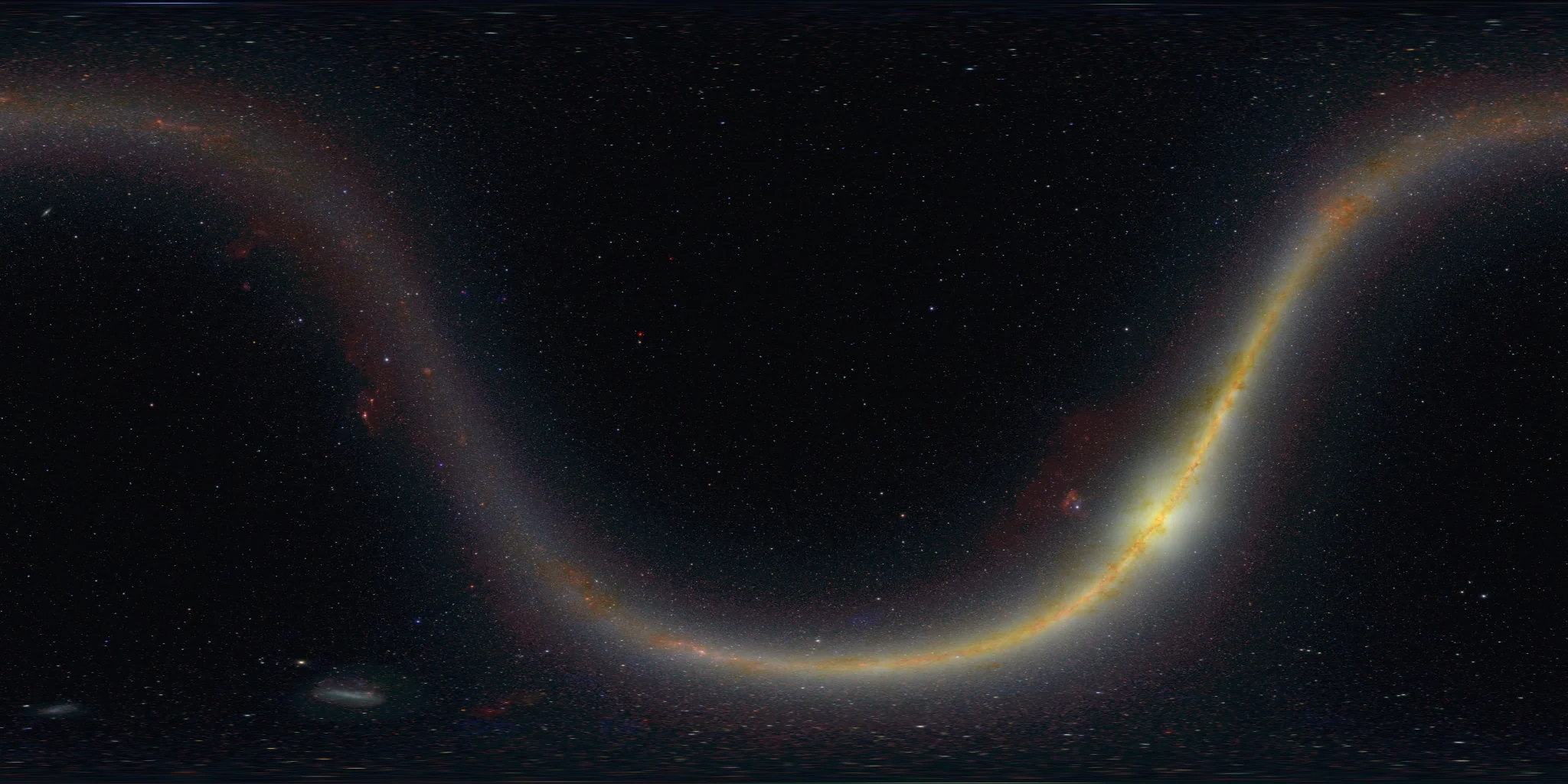
Behind: the SPHEREx all-sky map from Data Release 1 (Caltech/IPAC/NASA, IRSA).
The project in plain words
SPHEREx photographs the whole sky in infrared light, the colours just past red that our eyes cannot see, and comes back to every part of it about every six months. Flipping between its visits shows stars that move and stars that brighten or fade. Planet X Hunter makes that open to anyone.
There are two ways in. The Sky is a globe of the whole sky to spin and explore. The Lab is a workbench for any patch of sky, with every visit, the differences between them, spectra and the measurements behind them. An automatic search looks for moving and changing stars and lists what it finds on the Discoveries page.
Every number on the site comes from real data, and says where it comes from.
The challenge
Planet X Hunter is an entry to the NASA Space Apps Challenge 2026, for the challenge “Planet X and SPHEREx”. It asks for a public tool to explore SPHEREx images and see the sky change over time: blinking between visits, subtracting them, reading spectra, and testing it all on five known stars that move or vary.
The name recalls a century-old hunt for an unseen planet beyond Neptune, known as Planet X. Clyde Tombaugh found Pluto in 1930 by blinking two photographs of the same stars, the idea this site uses with SPHEREx’s infrared maps. No new planet is claimed here: the site shows what the data can and cannot reveal.
The team
Planet X Hunter is made by team Ninth Vanguard for the NASA Space Apps Challenge 2026. All of the work, from the first checks of the SPHEREx data to this page, is in the public repository.
Data credits and licences
The data and software this site is built on, and the terms they come with.
| Data | Credit | Terms |
|---|---|---|
| SPHEREx images and spectral cube | NASA/JPL-Caltech, served by the NASA/IPAC Infrared Science Archive (IRSA): Data Release 1 images doi:10.26131/IRSA678, the DR1 spectral cube doi:10.26131/IRSA679, and Quick Release 3 | NASA public data |
| AllWISE images (Then vs Now) | NASA/JPL-Caltech/UCLA, via IRSA | NASA public data |
| Gaia DR3 positions, motions and distances | ESA/Gaia/DPAC | Public; credit ESA/Gaia/DPAC |
| CatWISE2020 neighbours and survey matches | CatWISE team, via IRSA | NASA public data |
| SIMBAD object types | CDS, Strasbourg, via its CfA mirror | Public; credit CDS |
| Stars on the Sky globe | ESA Hipparcos: the Hipparcos Catalogue (ESA 1997) and its new reduction (van Leeuwen 2007), via VizieR, CDS | Public; credit ESA and CDS |
| Star names and constellation figures | d3-celestial by Olaf Frohn, collecting the IAU star names | BSD-3-Clause |
| Constellation boundaries | IAU boundaries (Roman 1987), via astropy | BSD-3-Clause (astropy) |
| WISE 0855−0714 motion | Kirkpatrick et al. 2021, ApJS 253, 7 | Published paper |
| Lab sky viewer | Aladin Lite, CDS, Strasbourg | LGPL-3.0 |
| Software and type | Licence |
|---|---|
| shadcn/ui and Radix UI | MIT |
| Cult UI text animation and Watermelon UI tabs | MIT |
| Skiper UI, free tier | Free with attribution |
| IBM Plex Sans and IBM Plex Mono | SIL Open Font License 1.1 |
| three.js, React Three Fiber, drei, Motion, Lenis, Recharts and the other libraries | MIT, ISC or Apache-2.0 |
| Planet X Hunter’s own code | Apache-2.0 |
How to cite the data
If you use what you find here, please credit the missions and catalogues behind it.
- SPHERExSPHEREx Data Release 1 images, doi:10.26131/IRSA678; the DR1 spectral cube, doi:10.26131/IRSA679; and Quick Release 3, all from the NASA/IPAC Infrared Science Archive. The SPHEREx pages at IRSA give the mission’s preferred acknowledgement.
- Gaia DR3Gaia Collaboration, Vallenari et al. 2023, A&A 674, A1; see ESA’s Gaia credits.
- Hipparcosvan Leeuwen 2007, A&A 474, 653.
- WISE 0855−0714 motionKirkpatrick et al. 2021, ApJS 253, 7.
Team Ninth Vanguard (2026). Planet X Hunter: a public explorer of the changing infrared sky seen by SPHEREx. NASA Space Apps Challenge 2026. https://planet-x-hunter.vercel.app (source code: https://github.com/aaaravM/planet-x-hunter).
Source and contact
The code is open source under the Apache-2.0 licence, at github.com/aaaravM/planet-x-hunter.
Questions, corrections or ideas are welcome: open an issue on GitHub.